
Introduction
Budgeting has always been one of the most important foundations of financial success. Nevertheless, many people view budgeting as restrictive, time-consuming, or overly complicated. Consequently, they either avoid budgeting altogether or abandon their plans after a few weeks. Unfortunately, this approach often leads to financial stress, unnecessary debt, inconsistent savings, and missed investment opportunities.
At the same time, managing money has become increasingly challenging in recent years. Housing costs have risen in many regions. Grocery bills have increased. Insurance premiums continue to grow. Furthermore, transportation, healthcare, and utility expenses consume a larger portion of household income than they did a decade ago. Therefore, many people are searching for a budgeting framework that is both simple and practical.
This is where the 50/30/20 budget rule enters the conversation.
For years, the 50/30/20 rule has been promoted as one of the easiest ways to organize personal finances. In fact, many financial advisors continue to recommend it because it provides a clear structure while remaining flexible enough for everyday life.
However, a valid question remains:
Does the 50/30/20 budget rule still work in 2026?
The short answer is yes.
However, the longer answer is more nuanced.
Although the framework remains highly effective, changing economic conditions mean that many households may need to adapt the percentages to fit their circumstances. Even so, the underlying principles remain just as valuable today as they were when the rule first gained popularity.
Let’s explore how the system works, why it became so popular, where it succeeds, where it struggles, and how you can make it work in today’s economy.
What Is the 50/30/20 Budget Rule?
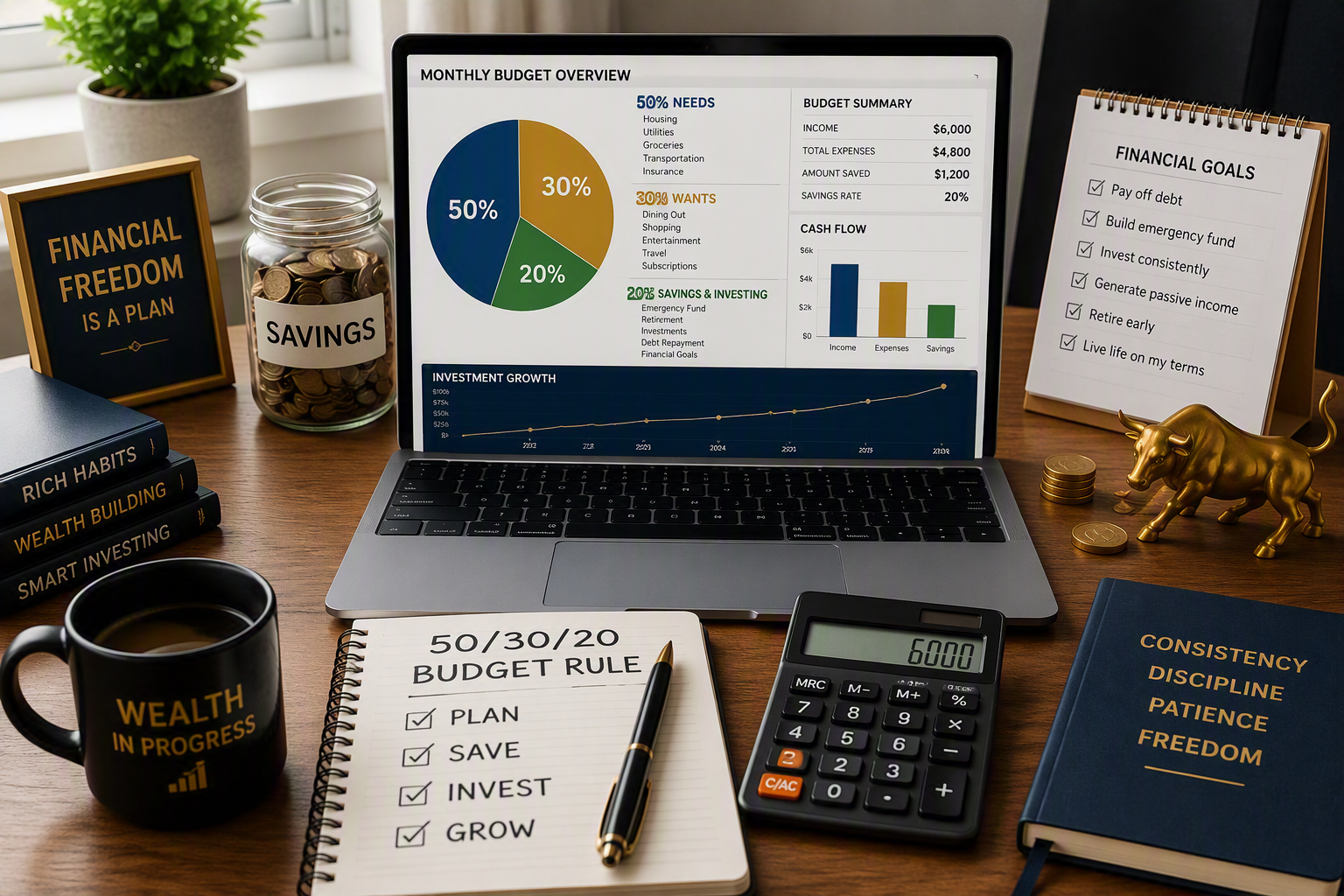
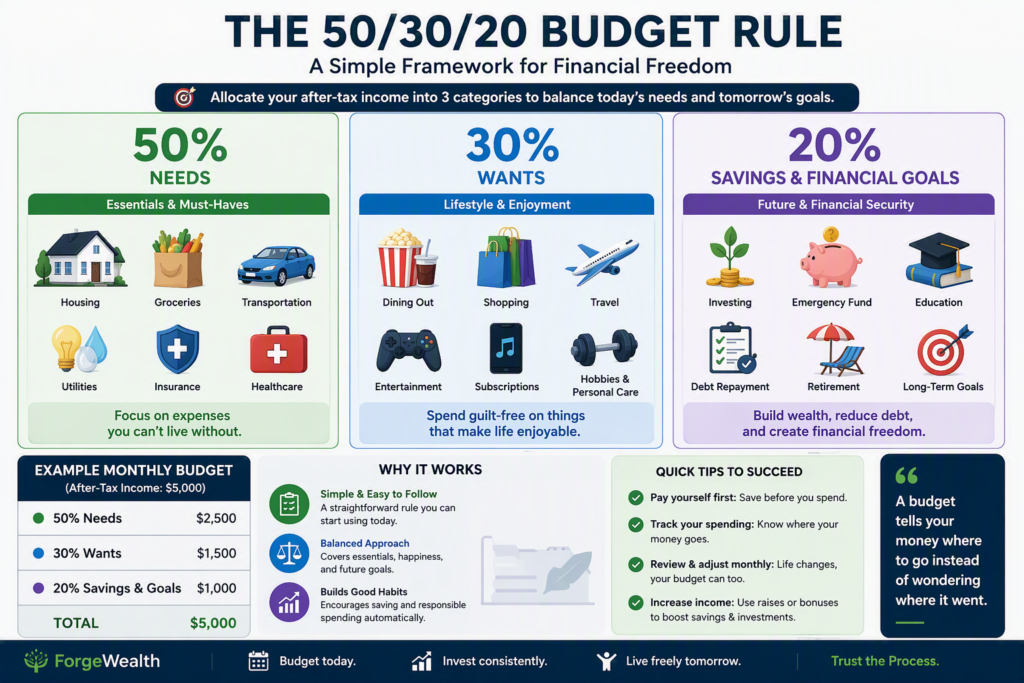
The 50/30/20 budget rule is a personal budgeting framework that divides your after-tax income into three broad categories.
Rather than tracking dozens of spending categories individually, the system simplifies money management into three percentages.
50% for Needs
These are essential expenses that support your basic standard of living.
Examples include:
- Rent or mortgage
- Groceries
- Utilities
- Transportation
- Insurance
- Healthcare
- Minimum debt payments
These costs generally cannot be avoided.
30% for Wants
This category covers discretionary spending.
Examples include:
- Dining out
- Entertainment
- Vacations
- Streaming services
- Gym memberships
- Shopping
- Hobbies
These expenses improve quality of life but are not required for survival.
20% for Savings and Financial Goals
This portion focuses on future financial security.
Examples include:
- Emergency funds
- Investments
- Retirement contributions
- Additional debt payments
- Wealth-building goals
As a result, the system creates balance between current enjoyment and long-term financial stability.
Why the 50/30/20 Budget Rule Became So Popular
Many budgeting systems require extensive tracking.
For example, some methods require individuals to categorize every transaction.
Others require complicated spreadsheets and ongoing monitoring.
While those strategies may work for certain people, they can feel overwhelming for beginners.
By contrast, the 50/30/20 budget rule simplifies the process.
Instead of obsessing over every purchase, the framework encourages individuals to focus on broad spending patterns.
Consequently, it feels more manageable.
Furthermore, because the system is easy to understand, it often encourages consistency.
After all, a simple budget followed consistently is usually more effective than a perfect budget that nobody uses.
In addition, the framework promotes balance.
Rather than forcing extreme frugality, it acknowledges that people should enjoy a portion of their income while still saving for the future.
Therefore, budgeting feels less like punishment and more like a financial roadmap.
How to Use the 50/30/20 Budget Rule
If you’ve never created a budget before, don’t worry.
The process is straightforward.
Step 1: Calculate Your Monthly Take-Home Income
Start with the amount you receive after taxes.
For example:
Monthly Income: $5,000
This becomes your budgeting foundation.
Step 2: Calculate Needs
Allocate 50%.
$5,000 × 50% = $2,500
This amount covers necessities.
Possible breakdown:
Rent: $1,400
Utilities: $200
Groceries: $400
Transportation: $300
Insurance: $200
Total: $2,500
Step 3: Calculate Wants
Allocate 30%.
$5,000 × 30% = $1,500
Possible breakdown:
Dining Out: $300
Entertainment: $200
Shopping: $400
Travel Fund: $300
Subscriptions: $300
Total: $1,500
Step 4: Calculate Savings
Allocate 20%.
$5,000 × 20% = $1,000
Possible breakdown:
Emergency Fund: $300
Retirement Investing: $500
Extra Debt Payments: $200
Total: $1,000
As a result, every dollar serves a purpose.
A Real-World 50/30/20 Budget Example
Let’s compare two individuals with identical incomes.
Person A: Following the Rule
Monthly Income:
$4,500
Needs:
$2,250
Wants:
$1,350
Savings:
$900
After one year:
$10,800 saved
Person B: No Budget
Monthly Income:
$4,500
Spending:
$4,300
Monthly Savings:
$200
After one year:
$2,400 saved
Although both earn the same amount, Person A builds wealth much faster simply because spending is intentional.
Why Budgeting Matters More Than Ever in 2026
Inflation has changed the financial landscape.
Many necessities now cost more than they did just a few years ago.
As a result, households must become increasingly strategic with their money.
Furthermore, economic uncertainty has reminded many people of the importance of:
- Emergency savings
- Financial flexibility
- Debt reduction
- Multiple income streams
Therefore, budgeting is no longer just about controlling expenses.
It is also about creating resilience.
Without a plan, rising costs can quietly consume every dollar of additional income.
With a plan, however, individuals gain visibility, control, and confidence.
How to Budget With Inflation
One of the biggest concerns facing families today is inflation.
Consequently, many people wonder how to budget effectively when prices continue rising.
The answer is not necessarily spending less on everything.
Instead, it involves spending more intentionally.
Prioritize Essentials First
Housing, food, transportation, and healthcare should remain the highest priorities.
Once necessities are covered, discretionary spending can be adjusted.
Review Recurring Expenses
Many people subscribe to services they rarely use.
Therefore, review recurring charges regularly.
Even small monthly savings accumulate over time.
Avoid Lifestyle Inflation
When income increases, many people automatically increase spending.
However, directing a portion of raises toward investments often produces stronger long-term results.
Shop Strategically
Rather than making impulse purchases, compare prices and plan purchases carefully.
Consequently, inflation has less impact on your overall budget.
Reevaluate Spending Quarterly
Your budget should evolve with your circumstances.
Therefore, review it every three months rather than once per year.
Does the 50/30/20 Rule Work for Everyone?
Not necessarily.
Although the framework is effective, individual circumstances vary.
For example, a person living in a high-cost city may spend:
60% on Needs
20% on Wants
20% on Savings
Meanwhile, someone living in a lower-cost area might save significantly more than 20%.
Therefore, flexibility is essential.
The percentages are guidelines rather than rigid requirements.
Common Budgeting Challenges
Many people start budgeting enthusiastically.
However, maintaining momentum can be difficult.
Let’s explore several common obstacles.
Underestimating Expenses
People often forget irregular expenses such as:
- Vehicle repairs
- Medical bills
- Annual subscriptions
- Gifts
- Home maintenance
Consequently, budgets become unrealistic.
Impulse Spending
Emotional purchases can derail even the best plans.
Therefore, implementing a 24-hour waiting period before major purchases can help.
Lack of Financial Goals
Saving becomes difficult when there is no clear objective.
By contrast, people tend to save more effectively when pursuing specific goals.
Examples include:
- Buying a home
- Building an emergency fund
- Investing for retirement
- Starting a business
Inconsistent Tracking
A budget only works when it is monitored.
Therefore, reviewing spending regularly remains essential.
Is This the Best Budgeting Method for Beginners?
For many individuals, yes.
There are several reasons why experts frequently recommend this framework for beginners.
First, it is simple.
Second, it promotes healthy financial habits.
Third, it reduces decision fatigue.
Fourth, it balances present enjoyment with future planning.
Most importantly, it encourages saving without requiring extreme sacrifice.
As a result, many people find it easier to maintain than stricter budgeting systems.
Alternative Budgeting Methods
Although the 50/30/20 rule is popular, it is not the only option.
Zero-Based Budgeting
Every dollar receives a specific assignment.
Income minus expenses equals zero.
This method provides maximum control.
However, it requires more effort.
Pay Yourself First
Savings become the first priority.
After investing and saving, remaining funds cover expenses.
This strategy works particularly well for wealth builders.
70/20/10 Rule
Some people prefer:
70% Spending
20% Saving
10% Investing
or similar variations.
Anti-Budget Method
Rather than tracking every expense, focus on saving a specific amount each month.
Everything else becomes flexible.
How a Budget Calculator Can Help
A budget calculator removes much of the guesswork.
Simply enter your monthly income, and the calculator estimates recommended allocation amounts.
For example:
Monthly Income: $6,000
Needs: $3,000
Wants: $1,800
Savings: $1,200
Consequently, calculations become faster and easier.
Building Wealth Through Better Budgeting
Many people mistakenly believe investing alone creates wealth
In reality, budgeting and investing work together.
Without budgeting:
- Savings become inconsistent.
- Investment contributions fluctuate.
- Financial goals become harder to achieve.
With budgeting:
- Saving becomes automatic.
- Investing becomes consistent.
- Wealth accumulation accelerates.
Therefore, a strong personal budget plan often serves as the foundation for long-term financial freedom.
Final Thoughts
The 50/30/20 budget rule continues to be one of the most practical and effective money management frameworks available in 2026.
Although rising living costs have made strict adherence more challenging for some households, the underlying philosophy remains remarkably relevant.
Furthermore, the rule works because it simplifies financial decision-making. Instead of tracking every dollar obsessively, it encourages balance, consistency, and intentional spending.
Most importantly, successful budgeting is not about perfection.
Rather, it is about progress.
Whether your budget ultimately becomes 50/30/20, 60/20/20, or another variation entirely, the goal remains the same:
- Spend wisely
- Save consistently
- Invest regularly
- Build financial security
Remember:
A budget is not a restriction on your lifestyle. Instead, it is a tool that helps create the lifestyle you truly want.
References
- Consumer Financial Protection Bureau (CFPB) – Budgeting and Money Management Resources: https://www.consumerfinance.gov
- Investopedia – Budgeting Basics and Personal Finance Guides: https://www.investopedia.com
- Fidelity Investments – Budgeting and Saving Strategies: https://www.fidelity.com
- Vanguard Investor Education Center: https://investor.vanguard.com
- NerdWallet Budget Calculator: https://www.nerdwallet.com
- U.S. Securities and Exchange Commission (SEC) Investor Resources: https://www.investor.gov



One thought on “The 50/30/20 Budget Rule: Is it still practical?”